“Food grade” sounds like a single certificate a tube either has or does not, but it is really a set of decisions about what touches the food, what documentation backs it up, and how the package is printed and glued. A kraft tube that is perfectly safe for a candle can be the wrong choice for coffee beans or protein powder. This is a plain-English look at what actually makes tube packaging food-safe, so you can specify it correctly and ask a supplier the right questions. It is general information rather than regulatory advice; the specifics depend on your product and your market, so confirm details with your supplier and the relevant food authority.
Direct contact versus indirect contact
The single most important idea is which layer actually meets the food. A printed paper tube is a composite: an outer board that carries your branding and an inner surface or liner that faces the product. When food sits directly against a layer, that layer is a direct-contact material and has to be safe for the specific food touching it. The outer printed board is usually an indirect-contact material, shielded by the liner, which is why the food-contact conversation centers on the inner liner rather than the pretty part on the outside. Get the liner right for your fill, and the rest of the structure follows. It also helps to think about how the tube will be filled and sealed, since a liner that is heat-sealed to lock in freshness behaves differently from one that simply lines an open tube closed with a cap, and that choice interacts with which barrier material makes sense.
The liner does the real work
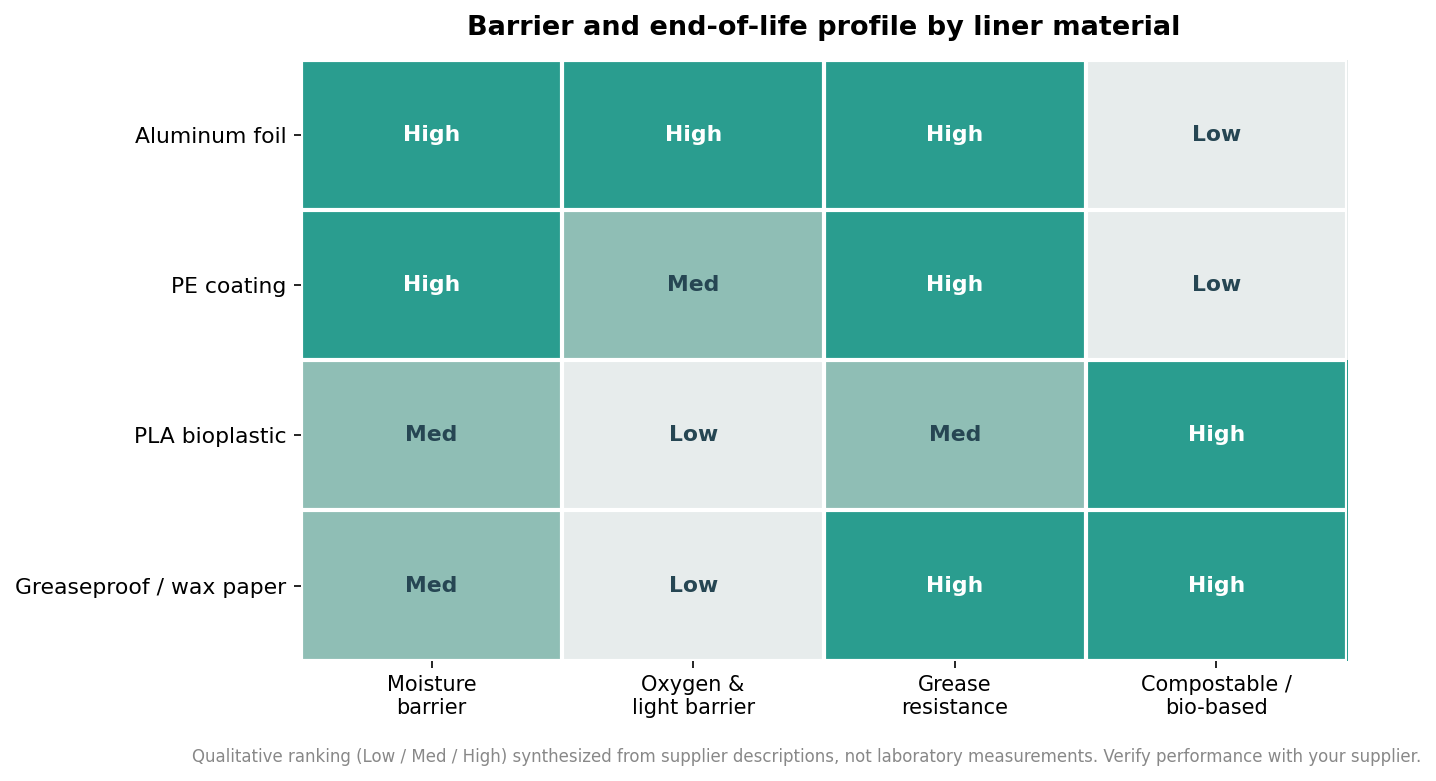
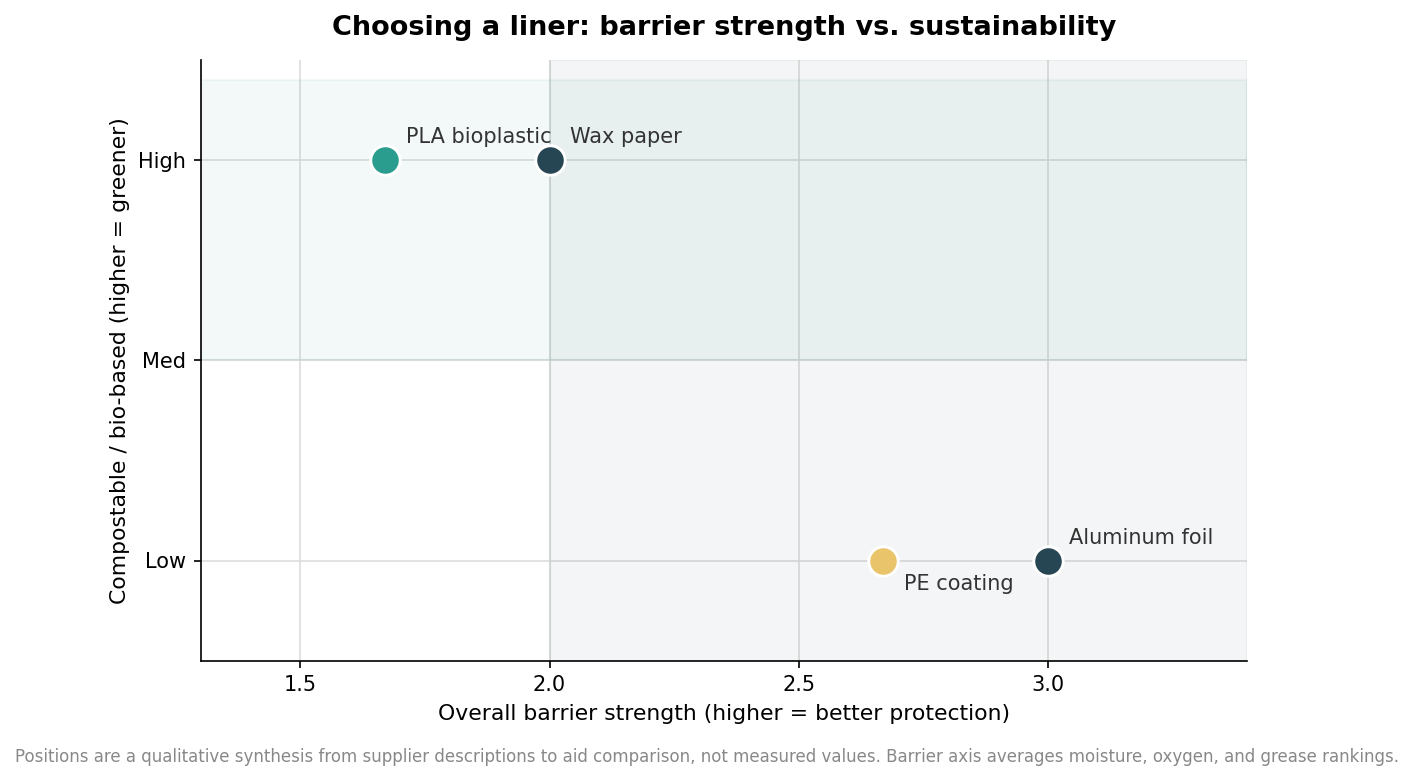
Four barrier materials cover most food-grade tubes, and they trade off protection, cost, and end-of-life. An aluminum foil liner is the strongest barrier, blocking moisture, oxygen, and light, which is why it shows up around coffee, protein powder, and supplements that go stale or oxidize; the catch is that foil is not compostable on its own. A polyethylene, or PE, coating is the workhorse for cost-effective protection, is authorized for direct food contact, and resists water well, but it is generally not compostable either. For brands prioritizing sustainability, PLA is a plant-based bioplastic derived from corn or sugarcane that is compostable under industrial conditions and suits dry snacks and cookies, though it tolerates less heat, softening somewhere around 45 to 50 degrees Celsius. Greaseproof or wax paper, treated with a food-safe wax, is the economical and biodegradable option for oily foods like cookies and dried fruit. Match the liner to how the food behaves: fatty foods need grease resistance, anything that stales needs an oxygen and moisture barrier, and moist products need a water-resistant surface.
How the safety framework actually works
In the United States, the FDA treats packaging through the lens of food contact substances, meaning materials that touch food without being intended to change it, including the adhesives and coatings in a tube. The central safety question is migration: how much of a substance could move from the packaging into the food, and is that amount safe. Manufacturers generally establish that a material is cleared for a given use through the Food Contact Notification program, and the FDA maintains a public inventory of the uses it has authorized. The practical takeaway for a buyer is that “food grade” is not a vibe; it is a documented, use-specific clearance. When a supplier says a liner is food-safe, that claim should be tied to a specific material cleared for a specific type of contact, and you are within your rights to ask which one.
Adhesives and inks count too
The liner gets the attention, but a tube is assembled with glue and decorated with ink, and both sit within the food-contact system. Reputable food-grade tubes use food-grade adhesives at the seams and lean on water-based or soy-based inks rather than solvent-heavy formulas, keeping the questionable chemistry away from the product. Because the print is on the outer, indirect-contact surface, it is less exposed than the liner, but low-migration inks and compliant adhesives are still part of a defensible food-safe build, especially for anything aromatic like coffee or tea where odor transfer is a real concern. Solvent residues and strong ink odors can migrate through paper more easily than people expect, so the aroma test is a quick, cheap sanity check: a food-safe tube should smell like paper, not like a print shop.
How to specify it and what to request
Turn all of this into a short, concrete brief for your supplier. State the exact product and how it behaves, whether it is dry, oily, moist, or aromatic, because that determines the barrier you need. Ask for the liner material by name and request a food-contact compliance statement for it, such as FDA or, for European sales, EU food-contact documentation; a serious supplier will have it. Confirm that the adhesives are food-grade and the inks are water- or soy-based, and if sustainability is part of your brand promise, decide honestly whether a compostable liner like PLA or wax paper meets your barrier needs or whether a foil or PE liner is worth the trade-off. Finally, order a sample and, for anything with a real shelf life, test it with your actual product before you commit to a full run, since the gap between a spec sheet and your specific food is exactly where problems hide. Nail the liner, the documentation, and the adhesives and inks, and your tube is food-safe in the way that counts: on paper and in practice.